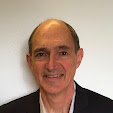
I'm on the other side of the wall now, as I left my job at the Port of Seattle in December and am now inventing a new life as a sole proprietor of a "strategic visualization" practice. Someone told me that to be successfully self-employed, you have to structure your week so that you spend at least some time working in each of your key "departments:" Research and Development; Marketing and Communications; Operations; and Administration and Finance. The fact that it took me almost four months to get around to posting on this blog is direct evidence of how long it has taken me to make the transition from "other"-organization to "self"-organization.
Someone else told me that consulting is like surfing, that you need to be ready to catch a big wave and try to ride it as long as you can, and then paddle back out and wait for the next one. This is a very different model from working in an "other"-organization, where there is always too much work and never enough time, so breathing is really not an option. I heard once that you should always consider your employees to be "volunteers," because they can always chose to work someplace else, and now that I have made that choice I can really feel what it feels like to be a volunteer.
Structure is a "strange attractor." You crave structure and routine, and are drawn into it, but once you get caught up in something you have lost a piece of your autonomy, or at least it can feel that way. There is something important and difficult about being able to get caught up in meaningful work and be able to sustain the feeling that what you are doing is "enough". This is not so much a function of your organization or job, as much as it is a zen-like mindset that allows you to feel satisfied, abundant, and enough, in the face of interminable needs, challenges and resource constraints. I had a friend once named Mary Lynn Pulley who wrote a book on "resilience" and I wonder if this quality is what she found in people who she observed to be resilient.
So, for now my quest is to find out what visualization tools are easy to find and use, to explain what we need to know and do in order to increase our system effectiveness and sustainability in this world. People talk about transparency without showing posters of how everything fits together. I am determined to change that. I want to see every meeting have posters up which show the participants who they are, where they are going and with whom, when and why. I am a why kind of guy. There must be a way to use graphics and visualization to show how all our competing objectives related to each other and us. The Rotary "four way test" is: "Is it the truth, is it fair to all concerned, is it beneficial to all concerned, and does it build good will and better friendships?" How would you answer these questions without a map of some kind, showing who, what, when, where, how and how much for "all" to see. I will let you know what I find out. I will post my findings here and on my Facebook page, my website http://www.burrstewart.com/ and maybe sometimes on Twitter (burrst). Maybe someday I will convince these social networking sites to have a graphical mapping component that helps you see your friends' lives playing out in multiple dimensions, not just the linear time line of day-to-day posts. Stay tuned.
Oh, what about the seven forms of intelligence? Anyone remember what they are? I think it's: Logical, Verbal, Emotional, Visual, Musical, Kinesthetic, and Self Knowledge. With the possible eighth one out there called Environmental, or maybe it's called "System Context." The point is that we have got to get on with the job of educating ourselves on the other intelligences beyond "reading, writing and arithmetic," which we now know isn't enough to do the job. So, get on with it!
Tuesday, April 20, 2010


Saturday, January 24, 2009
the big plan
Is there a big plan? Let me get this straight. People are living longer than they used to. The "carrying capacity" of the planet is somewhere in the neighborhood of 1-2 Billion people, depending on how many are vegetarians and pet owners, etc. When I was born we had about 3 B and now we have around 6.5 B. The UN estimates that population will level off around 10 B in the next 50 years ish. By 2100 CO2 levels will be around 700 (360 today?) and by about 1000 we all die from SO2 poisioning. So what's the plan exactly? Are more people going to have early deaths? Are we going to have negative interest rates, negative discount rates, success defined as having less? Will we have new ways of being happy while people are dropping like flies all around us? Hello?
Tuesday, October 14, 2008
Hands and Feet
Christine Toms was on "New Dimensions" this weekend talking about her epiphany about pain leaving her body like a string coming unwound, and mentioned a quote from Thich Nhat Hanh about focusing on "Hands and Feet, hands and feet" as a way to keep centered and present. This is an interesting addition to the normal "breathe and smile" tactic.
Friday, August 8, 2008
NIMS epiphany
I just took a class in the National Incident Management System (NIMS), and thought - isn't this a model for running every human activity efficiently, not just incidents? What if we were to establish standard functions like planning, logistics, finance, etc. and build them up and break them down according to workload, using common terms, org charts, chartfields for accounting, etc? It would make the basis for a whole semantic web funcionality. For example, all products and services would be accessible to all "incidents" (or projects, or operations - whatever you want to call "stuff that people need to get done").
"projectizing the organization" has made sense to me for a long time, but this NIMS system's flexible work breakdown structure adds the benefit of continuous flexibility in how people are organized and who's doing what. In addition, the concept of "unified command" is how you make collaboration visible and create accountability.
I work in an organization with a lot of well-defined departments, but this is making me think that if we did away with all the departments and created a sea of resources, then the "command" structure could be much more flexible and responsible than it is today, with more efficiency and more accountability for both individuals and objectives.
"projectizing the organization" has made sense to me for a long time, but this NIMS system's flexible work breakdown structure adds the benefit of continuous flexibility in how people are organized and who's doing what. In addition, the concept of "unified command" is how you make collaboration visible and create accountability.
I work in an organization with a lot of well-defined departments, but this is making me think that if we did away with all the departments and created a sea of resources, then the "command" structure could be much more flexible and responsible than it is today, with more efficiency and more accountability for both individuals and objectives.
Saturday, December 9, 2006
automated thinking
Talk to me about the easiest ways to map your thoughts and how they connect to others, using the computer. There must be a new kind of automated thinking coming, one where you can easily link your thoughts to the thoughts of others, and see it on maps. Even on Google Earth, you could type in your ideas and be taken to people near or far who have similar ideas. It's just an idea. What do you think of it?
Subscribe to:
Posts (Atom)